Mounjaro® vs Zepbound®: Indication, Format, Cost, and Travel Differences (2026)
Updated on: 2026-05-08
Table of Contents
🧮 Free dose math reference
The free GLP1 Calculator covers tirzepatide dose timing, titration schedules, and reconstitution math for compounded vials.
- What's the same: Both are tirzepatide
- FDA-approved indication
- Dose strengths and titration
- Format options: Pen vs single-dose vial
- Storage profile
- Travel logistics
- Cost and insurance coverage
- Side-effect profile
- Side-by-side reference table
- FAQ
- Disclaimer
1) What's the same: Both are tirzepatide
Both Mounjaro® and Zepbound® contain tirzepatide as the active ingredient, manufactured by Eli Lilly and Company. Tirzepatide is documented as a dual GIP/GLP-1 receptor agonist — activating both glucose-dependent insulinotropic polypeptide (GIP) and glucagon-like peptide-1 (GLP-1) receptors. Both are once-weekly subcutaneous injections.
The molecule is identical. The differences are in FDA indication, dose options, format availability, and insurance coverage.
2) FDA-approved indication
- Mounjaro® — FDA-approved for type 2 diabetes in adults. Approved 2022.
- Zepbound® — FDA-approved for chronic weight management in adults with obesity (BMI ≥ 30) or overweight (BMI ≥ 27) with at least one weight-related comorbidity. Approved 2023. Zepbound was further approved in 2024 for moderate-to-severe obstructive sleep apnea in adults with obesity.
The same molecule with two indications mirrors the Ozempic/Wegovy regulatory pattern at Novo Nordisk.
3) Dose strengths and titration
Both products use the same dose strength range, since they're the same molecule:
- Mounjaro® — 2.5 mg, 5 mg, 7.5 mg, 10 mg, 12.5 mg, 15 mg weekly. Titration starts at 2.5 mg for 4 weeks, escalating in 2.5–5 mg increments based on response.
- Zepbound® — 2.5 mg, 5 mg, 7.5 mg, 10 mg, 12.5 mg, 15 mg weekly. Same titration framework as Mounjaro.
The dose schedule is documented as essentially identical between the two brands.
4) Format options: Pen vs single-dose vial
This is where Mounjaro and Zepbound diverge significantly:
- Mounjaro® — available only as a single-use auto-injector pen. Each pen contains one weekly dose. After delivery, the pen is documented for disposal in a sharps container.
- Zepbound® — available in two formats: the same single-use auto-injector pen, AND a single-dose vial format (added in 2024). The vial format requires the patient to draw the dose into a syringe (Eli Lilly provides syringes with the vial supply). The vial format is documented as offered at a lower retail price for the LillyDirect direct-to-consumer pharmacy program.
The single-dose vial format for Zepbound is documented as Eli Lilly's response to the GLP-1 access crisis — a lower-cost format for patients without insurance coverage. The vial requires draw-up technique with a syringe but uses the same tirzepatide molecule at the same dose strengths as the pen format.
5) Storage profile
Eli Lilly's prescribing information documents the same storage profile for both products:
- Refrigeration: 2–8°C (36–46°F) for both pens and vials.
- Room-temperature window: Up to 21 days at room temperature (below 86°F / 30°C). Applies to both Mounjaro pens and Zepbound pens/vials.
- No freezing — documented as not part of either product's labeled storage profile.
- Light protection — original carton documented for light protection.
Zepbound's vial format follows the same temperature profile as the pen format. Once the vial seal is punctured for the single-dose draw, the medication is documented for prompt use; vials are not labeled as multi-dose.
6) Travel logistics
Documented travel logistics:
- Mounjaro® pens — one pen per weekly dose; fits in standard travel cases. The 21-day room-temperature window covers most trips without active cooling.
- Zepbound® pens — same as Mounjaro.
- Zepbound® vials — the single-dose vial plus syringe takes up slightly less space than a pen but adds the syringe to the carry-on inventory. Documented practice is keeping the vial in the original carton with the prescribed syringe alongside.
For a 14-night trip: Mounjaro and Zepbound each typically require 2 pens (or vials) for the trip plus 1 backup. For TSA carry-on, both fall under the medical-liquids exemption.
7) Cost and insurance coverage
Documented retail and access landscape:
- Mounjaro® pen — retail roughly $1,000–$1,200 per month without insurance. Documented as covered by most commercial insurance plans for type 2 diabetes diagnosis. Medicare Part D covers Mounjaro for diabetes.
- Zepbound® pen — retail roughly $1,000–$1,300 per month without insurance. Documented as having less consistent insurance coverage than Mounjaro for the weight-management indication. Medicare doesn't cover Zepbound for weight management (statutory exclusion); 2024 sleep-apnea indication may change coverage.
- Zepbound® vial (LillyDirect) — documented as offered at $349–$499 per month depending on dose strength and box size, through Eli Lilly's direct-to-consumer LillyDirect pharmacy. Significantly lower than retail pen pricing.
Eli Lilly's manufacturer savings cards documented for both products reduce out-of-pocket cost for eligible commercial-insurance patients.
8) Side-effect profile
Documented side-effect profile is similar for both since they're the same molecule. Most commonly documented adverse events:
- Nausea (most common; documented in ~25–36% of patients depending on dose)
- Vomiting
- Diarrhea or constipation
- Abdominal pain or discomfort
- Decreased appetite
- Fatigue
- Injection-site reactions
Boxed warning includes risk of thyroid C-cell tumors (based on rodent studies); contraindications include personal or family history of medullary thyroid carcinoma or Multiple Endocrine Neoplasia syndrome type 2.
9) Side-by-side reference table
| Property | Mounjaro® | Zepbound® |
|---|---|---|
| Active ingredient | Tirzepatide | Tirzepatide |
| FDA indication | Type 2 diabetes | Weight management; OSA in obesity |
| Dose strengths | 2.5, 5, 7.5, 10, 12.5, 15 mg | 2.5, 5, 7.5, 10, 12.5, 15 mg |
| Format options | Single-use pen only | Single-use pen + single-dose vial |
| Refrigeration | 2–8°C | 2–8°C |
| Room-temp window | 21 days | 21 days |
| Approx retail/month | $1,000–$1,200 | $1,000–$1,300 (pen); $349–$499 (vial via LillyDirect) |
| Medicare coverage | Yes (diabetes) | OSA indication only since 2024 |
| Pens/vials for 14-night trip | ~3 | ~3 |
10) FAQ
Are Mounjaro and Zepbound the same medication?
Both contain the same active ingredient, tirzepatide, manufactured by Eli Lilly. They differ in FDA-approved indication (diabetes vs weight management/sleep apnea) and format options (Zepbound also available as a single-dose vial).
Why does Zepbound have a vial format and Mounjaro doesn't?
Eli Lilly introduced the Zepbound vial format in 2024 as a lower-cost direct-to-consumer option through LillyDirect, in part to address access challenges for the weight-management indication where insurance coverage is less consistent. Mounjaro is documented as available only in pen format.
Can a patient switch between Mounjaro and Zepbound?
Some patients are documented as switching based on insurance coverage and indication. The decision is documented as one for the prescribing healthcare provider, considering FDA indication, insurance coverage, and individual response.
Is Zepbound's vial format the same as compounded tirzepatide?
No. Zepbound's single-dose vial is FDA-approved branded tirzepatide manufactured by Eli Lilly to the same standards as the Zepbound pen. Compounded tirzepatide is mixed by a 503A or 503B compounding pharmacy and is not FDA-approved as a finished product. The brand vial and compounded vial both use the same active ingredient but have different regulatory status.
Which is better for travel: Mounjaro pen or Zepbound vial?
The pen format (whether Mounjaro or Zepbound) is documented as more travel-friendly because it's pre-filled and ready to inject. The Zepbound vial requires drawing the dose with a syringe, which adds a step and additional sharps to manage. Storage profile (21 days at room temp ≤86°F) is identical between the formats.
Trademark notice: Mounjaro® and Zepbound® are registered trademarks of Eli Lilly and Company. LillyDirect™ is a service of Eli Lilly. Vialcase is independent and is not affiliated with, endorsed by, or sponsored by Eli Lilly. References are descriptive of FDA-approved medications and refer to publicly available manufacturer prescribing information.
Recommended Travel Cases
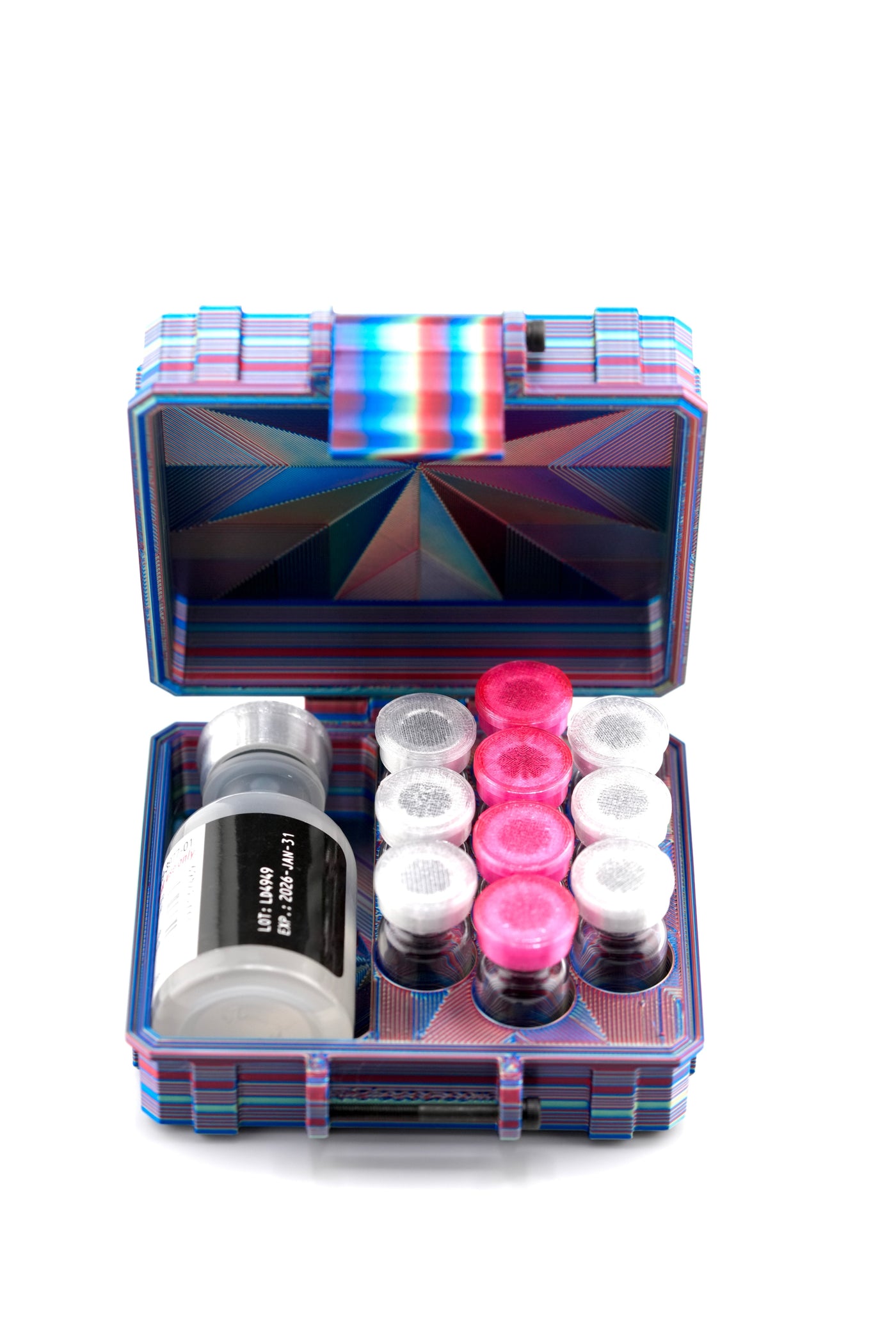
Vialcase produces hard-shell vial cases sized for GLP-1 pens, peptide vials, BAC water bottles, and reconstitution supplies. Three options most commonly referenced for travel:


Browse all vial storage cases →
Disclaimer
This article is informational reference only on documented differences between two FDA-approved tirzepatide medications. It is not medical or legal advice and does not direct any specific clinical action. Refer to manufacturer prescribing information and a licensed healthcare provider for clinical guidance specific to either medication.
Find your perfect case
Hard-shell, dust-free storage for every vial size. Made to order and backed by our 30-day guarantee.
Shop All Cases →