
Wine fridges are quietly the best-kept secret in peptide storage. They use the same compressor cooling as full-size refrigerators, hold ±1 °F more reliably than budget mini fridges, and most go down to 40 °F — which puts them comfortably inside the 2–8 °C peptide window.
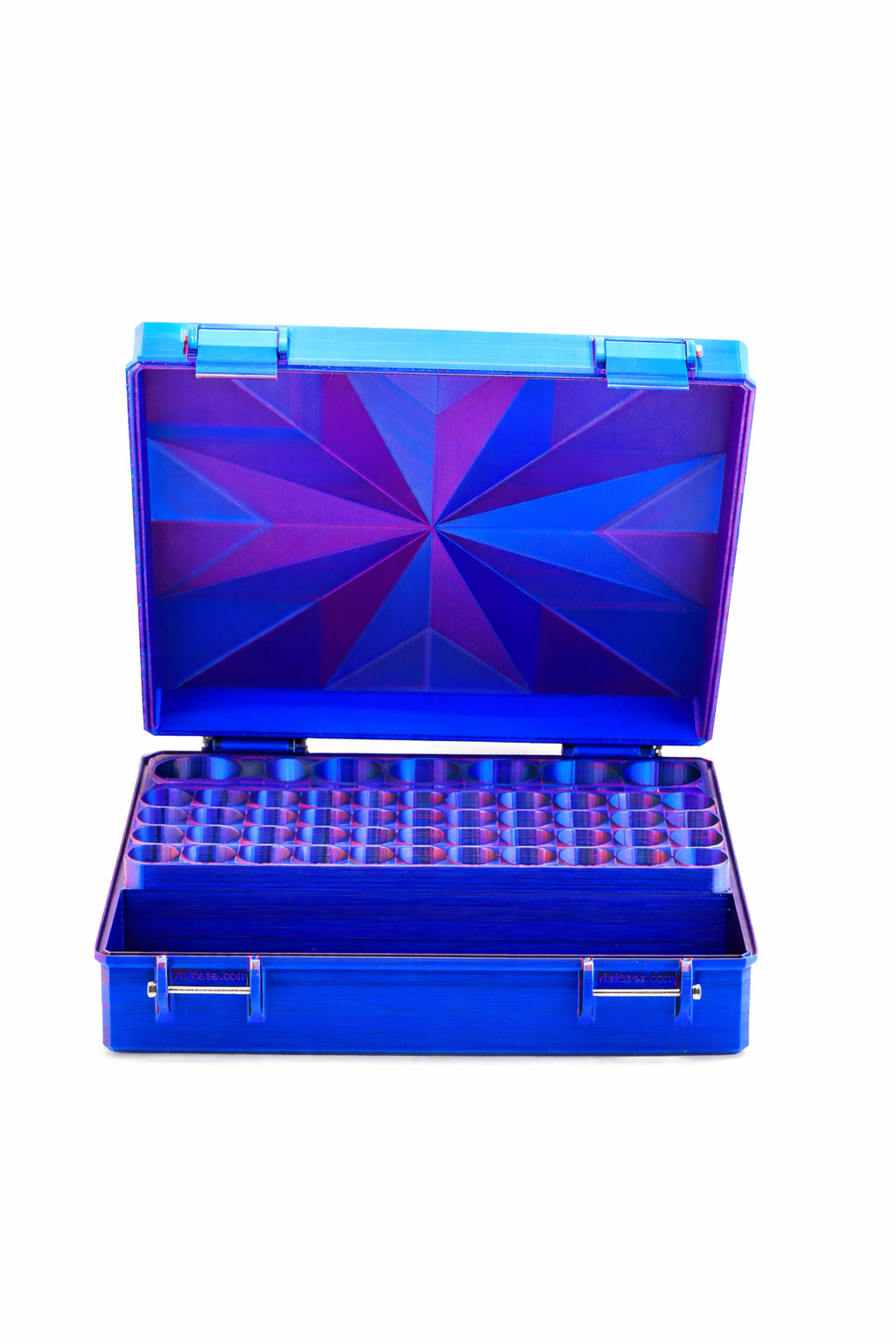
Dual-zone units are even better: one compartment for vials (set 38–42 °F), the other for BAC water, syringes, or anything else (set higher). Below, the case for using a wine fridge for peptides, and five units that work.
Why wine fridges work for peptides
- Compressor cooling on every model — there are no thermoelectric wine "fridges" sold to serious wine buyers, so you avoid the cheap-mini-fridge trap.
- Temperature range that includes the peptide window. Most wine fridges go 40–66 °F. Set to 40, you're at 4 °C — dead center of 2–8 °C.
- Built-in humidity control. Wine likes 50–70% RH, which is fine for sealed peptide vials and prevents the labels-peeling problem of dry mini fridges.
- Glass front — see your inventory without opening, reducing temperature swings.
- Quiet — wine fridges are designed for living rooms, so ~38 dB is typical.
- Locking models exist for clinics + households with kids.
Trade-offs vs a mini fridge
- Footprint. A 24-bottle wine fridge is ~14" wide × 25" tall. About the same as a 1.6 cu ft mini fridge.
- Shelving. Wine racks are sloped for bottles. You either remove a few racks to flat-load vial cases or use the existing racks to organize 3 mL cases stacked.
- Price. Quality dual-zone units start at ~$260, similar to a good compressor mini fridge.
The 5 picks
1. Best overall — Kalamera 24-Bottle Dual-Zone
Two independently-controlled compartments, 40–66 °F upper / 40–66 °F lower. Glass front with UV-blocking tint (relevant — peptides are light-sensitive). 38 dB. ~$430.
Remove the bottom rack and you have a flat shelf big enough for two Vial Vault Pro Max cases stacked. Top zone for sealed BAC water, dry supplies, or wine.
Shop Kalamera dual-zone on Amazon Prime →
2. Best small — NewAir AWR-460DB 46-Bottle Dual
Slightly larger overall but still 15" wide. Holds ~$600 in storage capacity at full peptide load (100+ 3 mL vials with cases). Locking door. ~$650 — premium but pays for itself if you run a clinic.
3. Best budget — Antarctic Star 12-Bottle Single Zone
Single zone but adjustable 40–60 °F, glass front, 30 dB. The cheapest "compressor wine fridge" that actually holds temperature. ~$160 — pure peptide use case.
Shop Antarctic Star wine fridge on Amazon Prime →
4. Best for clinics — Vinotemp 18-Bottle Lockable
Stainless steel, key-lock door, digital display, dual-zone. ~$540. The locking door makes it a defensible inventory control unit for med spas — you can lock it during off-hours and limit access to keyed staff.
Shop Vinotemp on Amazon Prime →
5. Best built-in — EdgeStar CWB1760FD 28-Bottle
Built-in or freestanding. Reversible door. 40–65 °F range, dual-zone, 38 dB. ~$700. For a permanent setup where the fridge lives in a cabinet or under a counter.
Shop EdgeStar on Amazon Prime →
How to set up a wine fridge for peptides
- Set lower zone (or single zone) to 40 °F (4 °C). That's mid-window.
- Remove the bottom 2–3 racks to create a flat shelf. Keep removed racks aside for resale value.
- Place a hard-shell vial case (Vial Vault Pro Max) on the flat shelf — avoid letting vials roll loose.
- Run a separate logger (TempView or a WiFi sensor) for the first week to verify the unit holds.
- If using dual-zone: keep BAC water + syringes in the upper zone at 50–55 °F to save the colder zone for peptides.
When a wine fridge isn't right
- If you only have a few vials. An 8-slot case in your normal kitchen fridge works fine — the wine fridge is for inventory of 20+ vials.
- If your home gets above 85 °F regularly. Some wine fridges struggle in hot ambient. Compressor mini fridges handle heat better.
- If you need below 36 °F. Most wine fridges bottom out at 40 °F. For freezer-grade storage (long-term sub-zero peptide reserves), you need a lab freezer.
Pair with a hard-shell case
A wine fridge holds temperature; a hard-shell vial case keeps vials organized, drop-proof, and ready to grab for travel without opening the whole fridge.
- Vial Vault Pro Max — combo case for 35–56 vials.
- Ultimate Jumbo 300 — bulk inventory for med spa setups.
Related
Frequently Asked Questions
Why use a wine fridge instead of a mini fridge?
Wine fridges almost universally use compressor cooling (no thermoelectric trap), have tighter temperature stability (±1 °F vs ±3–5 °F on budget mini fridges), and include humidity control. The 40 °F minimum is dead center of the peptide window.
Does a wine fridge get cold enough for peptides?
Yes — most go down to 40 °F (4 °C), which is mid-range of the 2–8 °C peptide spec. Set to 40 °F you have 5 °F of buffer before drifting out of spec.
Do I need a dual-zone wine fridge?
For peptides + BAC water in the same unit, yes. Set the lower zone to 40 °F for vials and the upper zone to 50–55 °F for BAC water and supplies. Saves you from buying two fridges.
Can I remove the wine racks?
Yes, most wine fridges have removable racks. Keep the racks aside for resale value. Removing 2–3 racks creates a flat shelf big enough for two Vial Vault Pro Max cases stacked.
Will the door alarm be useful?
On a wine fridge, usually no — but the locking units (Vinotemp, NewAir AWR-460DB) are valuable for clinics or households with kids who might accidentally leave the door open.
Are wine fridges quiet enough for a bedroom?
Yes — most run at 36–42 dB, quieter than a typical mini fridge. Designed for living rooms with TVs and conversation, so they don't buzz noticeably.
Affiliate disclosure: VialCase is a participant in the Amazon Services LLC Associates Program. As an Amazon Associate, VialCase earns from qualifying purchases at no additional cost to you. Trademarks: All brand names and product names referenced (including but not limited to Ozempic®, Wegovy®, Mounjaro®, Zepbound®, and any device or supplement brand mentioned) are the property of their respective owners and are used here for editorial identification only. VialCase is not affiliated with, endorsed by, or sponsored by these brands.
Educational only. Confirm storage specs with your prescribing healthcare provider.


