Compounded vs Branded GLP-1: Cost, Storage, Quality, and Travel Differences (2026)
Updated on: 2026-05-08
Table of Contents
🧮 Free reconstitution math
Compounded vials require dose math. The free GLP1 Calculator handles vial mg + BAC mL + concentration + U100 syringe units in one tool.
- Regulatory status
- Cost difference
- Format: Pre-filled pen vs lyophilized vial
- Preparation: Inject vs reconstitute
- Storage profile differences
- Travel logistics differences
- Quality and consistency
- FDA shortage list and compounding access
- Side-by-side reference table
- FAQ
- Disclaimer
1) Regulatory status
The most fundamental difference is regulatory:
- Branded GLP-1 pens (Ozempic®, Wegovy®, Mounjaro®, Zepbound®) — FDA-approved finished products. Manufactured by Novo Nordisk or Eli Lilly under FDA-registered cGMP facilities. Each lot tested to documented quality specifications. Stability and storage profile validated by the manufacturer.
- Compounded GLP-1 vials — mixed by a 503A or 503B pharmacy. Not FDA-approved as a finished product. The active ingredient (semaglutide or tirzepatide) is sourced from FDA-registered API suppliers, but the compounded preparation itself doesn't carry FDA approval. 503A pharmacies operate under state board oversight; 503B outsourcing facilities operate under FDA cGMP requirements.
The regulatory difference is documented in pharmaceutical literature as material — branded products have validated stability, sterility, and dosing accuracy; compounded products vary by pharmacy and batch.
2) Cost difference
The cost differential is the documented driver of compounded GLP-1 demand:
- Branded pens — retail $1,000–$1,600 per month without insurance.
- Compounded vials — retail $200–$500 per month historically; some sources documented as low as $150–$300/month with subscription pricing.
- Zepbound® vial via LillyDirect — $349–$499/month; positioned as a documented middle ground between full-retail pen and compounded vial pricing.
The 4–6× cost difference between branded and compounded is documented as the reason millions of patients have used compounded GLP-1s, particularly for weight management where insurance coverage is less consistent.
3) Format: Pre-filled pen vs lyophilized vial
Documented format differences:
- Branded pens — pre-filled, ready to inject. Each pen contains the medication in liquid solution, manufactured-validated for stability. Patient dials the dose (Ozempic) or selects the prefilled dose (Wegovy/Mounjaro/Zepbound) and injects.
- Compounded vials — typically supplied as lyophilized (freeze-dried) powder in a 5 mg or 10 mg vial. Patient reconstitutes with bacteriostatic water before first use, then draws individual doses with a U100 insulin syringe. Some compounded products are supplied pre-mixed in liquid form.
The lyophilized format is documented as supporting longer shelf-life pre-reconstitution but requires the patient to handle reconstitution and dose-calculation each cycle.
4) Preparation: Inject vs reconstitute
The preparation workflow differs substantially:
- Branded pen workflow — attach pen needle, prime, dial dose (Ozempic) or confirm dose (single-use pens), inject. Total time ~30 seconds.
- Compounded vial workflow — reconstitute with BAC water (typically 2 mL into a 5 mg or 10 mg vial), wait for full dissolution, draw the calculated dose with a U100 syringe, swab injection site, inject. Total time ~3–5 minutes for the first reconstitution; ~1–2 minutes for subsequent draws.
Documented patient preference data references the pen format as more convenient. Compounded vials require additional supplies (BAC water, syringes, alcohol pads, sharps container) and dose calculation.
5) Storage profile differences
Documented storage differences:
- Branded pens — pre-puncture: 2–8°C refrigerated. Post-first-use: room-temperature window per product (Ozempic 56 days, Wegovy 28 days, Mounjaro/Zepbound 21 days). Manufacturer-validated stability data.
- Compounded vials, lyophilized — pre-reconstitution: typically refrigerated; some products labeled for room-temp storage. Beyond-use date (BUD) per pharmacy label, often 90–180 days from compounding.
- Compounded vials, post-reconstitution — refrigerated 2–8°C; pharmacy-labeled BUD typically 28–60 days post-reconstitution. Stricter cold-chain than branded pens because there's no manufacturer-validated room-temperature stability data for the compounded preparation.
The room-temperature flexibility documented for branded pens is one of the reasons clinical practice references them as more travel-friendly. Compounded vials are typically documented as kept refrigerated continuously when feasible.
6) Travel logistics differences
Documented travel implications:
- Branded pens — one or a few pens cover most trips. The room-temperature window provides flexibility for cabin temperature variation during long flights and hotel storage gaps.
- Compounded vials — vial + BAC water bottle + syringes + sharps container + alcohol pads. More items to organize. Stricter cold-chain expectation. Documented practice for compounded vials on travel is active cooling throughout.
For TSA carry-on, both fall under the medical-liquids exemption. For documented details, see our GLP-1 Travel Master Guide.
7) Quality and consistency
Documented quality landscape:
- Branded products — cGMP-manufactured, every lot tested. Documented batch-to-batch consistency.
- 503B compounded — FDA-inspected outsourcing facilities. Stricter quality controls than 503A.
- 503A compounded — state board oversight. Quality varies by pharmacy. Documented practice for verifying compounded GLP-1 quality includes checking for: pharmacy NABP accreditation, 503A or 503B designation, third-party testing, original API source documentation (typically Chinese manufacturer COA), beyond-use date, and lot number.
8) FDA shortage list and compounding access
Documented shortage-list status as of 2026:
- Semaglutide — FDA removed from shortage list in October 2024. 503A and 503B pharmacies were given a wind-down period; widespread compounded semaglutide production ended in 2025. Some 503A pharmacies continue compounding under specific patient-specific exemption criteria.
- Tirzepatide — FDA removed certain doses from shortage list in late 2024; other doses remain on shortage as of 2026. Compounded tirzepatide remains available at the doses still on shortage. 503B pharmacies continue producing where the shortage status supports it.
The shortage-list status is documented as the regulatory mechanism that permits or restricts compounding of brand-equivalent products. The legal landscape continues to evolve.
9) Side-by-side reference table
| Property | Branded pen | Compounded vial |
|---|---|---|
| Regulatory status | FDA-approved | Not FDA-approved |
| Manufacturer | Novo Nordisk / Eli Lilly | 503A or 503B pharmacy |
| Cost/month | $1,000–$1,600 | $200–$500 |
| Format | Pre-filled pen | Lyophilized powder vial |
| Preparation | Inject (~30 sec) | Reconstitute + draw + inject (~3 min) |
| Storage post-use | Up to 56 days room temp | Refrigerated 28–60 days |
| Travel friendliness | High (1–2 pens per trip) | Moderate (vial + supplies) |
| Quality validation | cGMP, lot-tested | Varies by pharmacy |
| 2026 availability | Standard channels | Tirzepatide some doses; semaglutide limited |
10) FAQ
Is compounded GLP-1 the same as branded?
The active ingredient (semaglutide or tirzepatide) is the same molecule. The finished product is not the same — branded products are FDA-approved with validated stability and dosing; compounded products are pharmacy-mixed without FDA approval as a finished product.
Why is compounded GLP-1 so much cheaper?
Branded products carry the cost of FDA approval, clinical trials, marketing, and manufacturer profit margins. Compounded products are pharmacy preparations that don't carry these costs. The 4–6× price differential is documented as the driver of compounded GLP-1 demand.
Is compounded GLP-1 still legal?
Compounding of FDA-approved drugs is legal under specific conditions. The drug must be on the FDA shortage list, OR the compounding must meet 503A/503B regulatory criteria for patient-specific compounding. As of 2026, semaglutide is generally off the shortage list and tirzepatide remains on the list at certain doses. The legal landscape continues to evolve.
Which is better for travel: branded pen or compounded vial?
Branded pens are documented as more travel-friendly — pre-filled, ready to inject, with longer room-temperature windows. Compounded vials require BAC water, syringes, and stricter cold-chain storage. For long trips or unpredictable storage conditions, branded pens are documented as the preferred format in travel literature.
Are Zepbound vials the same as compounded tirzepatide?
No. Zepbound's single-dose vial format (introduced 2024 via LillyDirect) is FDA-approved branded tirzepatide manufactured by Eli Lilly. Compounded tirzepatide is mixed by a 503A or 503B pharmacy without FDA approval. Both contain tirzepatide but have different regulatory status.
Trademark notice: Ozempic® and Wegovy® are registered trademarks of Novo Nordisk A/S. Mounjaro® and Zepbound® are registered trademarks of Eli Lilly and Company. LillyDirect™ is a service of Eli Lilly. Vialcase is independent and is not affiliated with, endorsed by, or sponsored by Novo Nordisk, Eli Lilly, or any compounding pharmacy. References are descriptive of FDA-approved medications, publicly available manufacturer prescribing information, and publicly available regulatory information.
Recommended Travel Cases
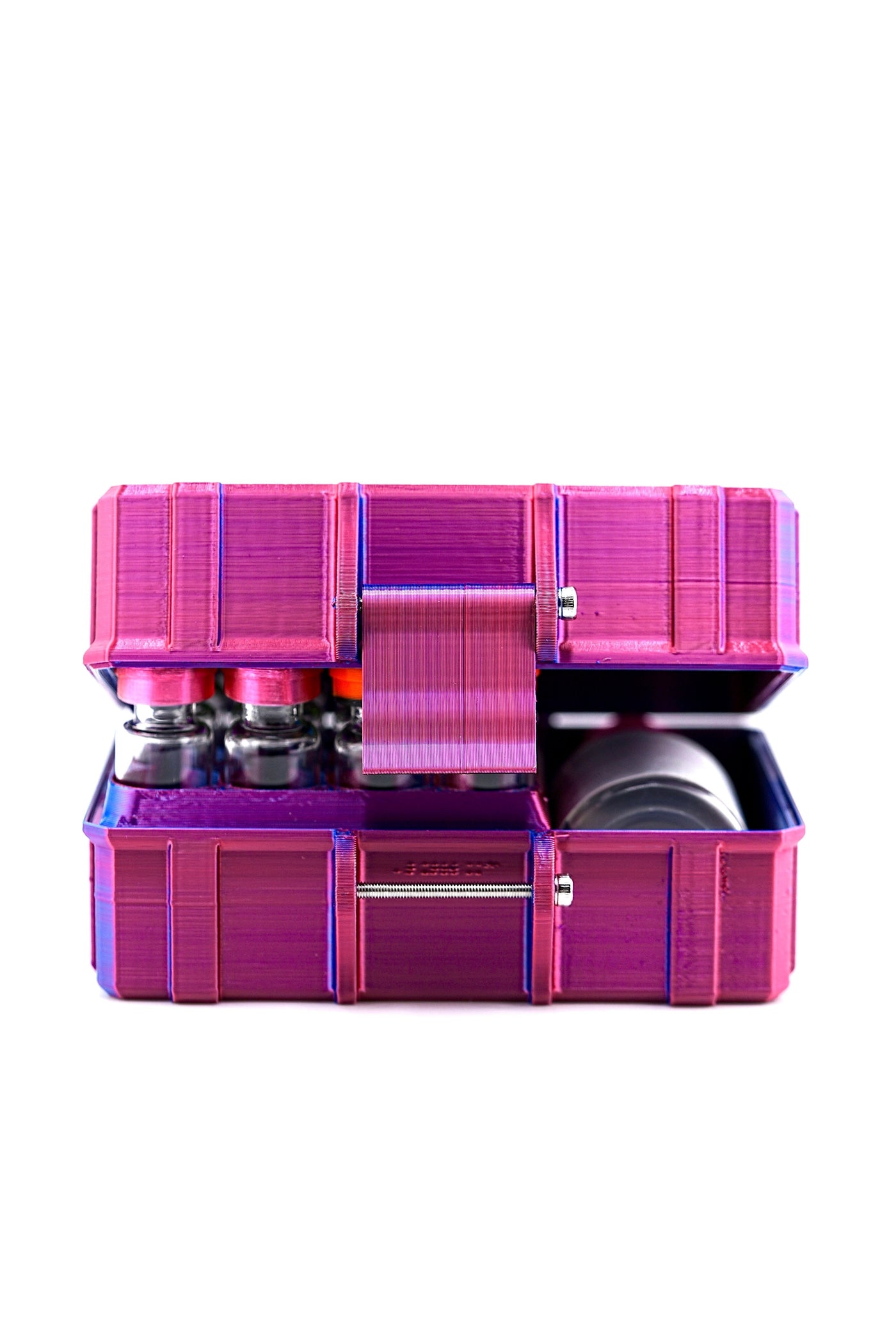
Vialcase produces hard-shell vial cases sized for GLP-1 pens, peptide vials, BAC water bottles, and reconstitution supplies. Three options most commonly referenced for travel:


Browse all vial storage cases →
Disclaimer
This article is informational reference only on documented differences between branded and compounded GLP-1 medications. It is not medical or legal advice and does not direct any specific clinical action. The regulatory landscape for compounded GLP-1s continues to evolve. Refer to manufacturer prescribing information, current FDA guidance, and a licensed healthcare provider for clinical guidance and current regulatory status.
Find your perfect case
Hard-shell, dust-free storage for every vial size. Made to order and backed by our 30-day guarantee.
Shop All Cases →